

 Strong credit, currency and market signals set against high reported public-debt ratios
Singapore Investor Score and Market Research Guide
Singapore records a 77 Investor Score with all 11 primary components available. Its standout signals are sovereign credit at 100, inflation at 100, currency at 98 and property prices at 98. The central trade-off is debt: central government debt was 167.80% of GDP in 2024, while the 2026 general-government estimate is 163.781%.
- Start by checking the score components against your intended asset, then review the published sovereign-rating dates and the two debt definitions. Confirm current market-access, ownership, banking and tax rules from primary documents before acting; crypto-tax treatment remains unavailable in this dataset.
- This page uses the 2026 Hide My Cash country dataset. The overall score requires at least 8 of 11 primary components; unavailable indicators are never estimated.
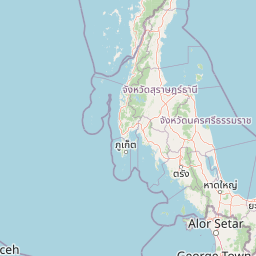
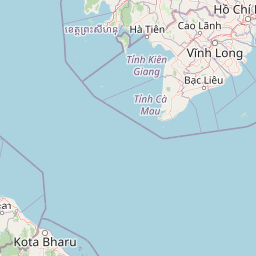

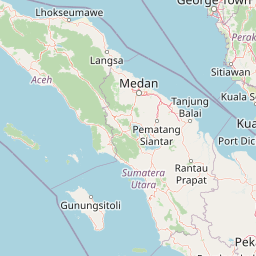
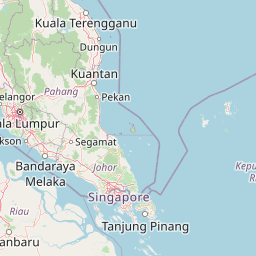

 77SGP
Singapore signal radar
Higher scores usually mean a more favorable research signal. Debt and tax are normalized so stronger scores are better for capital-preservation research.
Quick facts
Compare Singapore with


Why Singapore's credit and market signals stand out
Singapore combines a 77 Investor Score with complete coverage across all 11 primary components. Sovereign credit scores 100, supported by AAA or Aaa ratings with Stable outlooks from S&P, Fitch and Moody's. Currency scores 98, stocks and ETFs 91, capital mobility 94 and banking 79. Market scale is also visible in the underlying observations: stock-market capitalisation was 136.51% of GDP in 2025, with 394 listed companies. These readings make Singapore useful for research centred on credit quality, currency conditions and investable-market infrastructure, while still requiring asset-specific access checks.
Debt ratios and the missing crypto-tax field need separate review
Debt is the sharpest counterweight in the profile: the debt component scores 0. Central government debt was 167.80% of GDP in 2024, and the 2026 general-government debt estimate is 163.781%. Those measures use different government definitions and observation types, so they should not be treated as interchangeable. Crypto scores 76, but crypto-tax information is unavailable; the dataset therefore cannot establish tax treatment. Before drawing conclusions, review the debt methodology, current fiscal documents and current tax rules relevant to the intended transaction.
Match Singapore's component strengths to the asset being studied
For listed-market research, the stocks and ETFs score of 91 sits alongside a market-depth score of 57, 394 listed companies and market capitalisation equal to 136.51% of GDP in 2025. For cash and currency questions, the currency score is 98, banking is 79 and account ownership stood at 97.97% in 2024. Property research presents a different mix: real estate scores 72 and property prices 98. Use the relevant component as a starting filter, then verify present access, costs, ownership rules, liquidity and tax treatment for the specific asset.
Data confidence for Singapore
Hide My Cash combines country-level research signals into a simple comparison view. Some indicators are unavailable for thinner markets; missing values stay visible rather than being invented.
FAQ
What is Singapore's Investor Score in the 2026 data?
Singapore's Investor Score is 77, calculated with all 11 primary components available. It shares eligible rank 11 in the current published comparison set.
Which Singapore score components are strongest?
Sovereign credit and inflation each score 100. Currency and property prices each score 98, capital mobility scores 94, and stocks and ETFs score 91.
How large is Singapore's public debt in the dataset?
Central government debt was 167.80% of GDP in 2024. General-government debt is estimated at 163.781% of GDP for 2026; the definitions and observation types differ.
Does the Singapore profile include crypto-tax treatment?
No. Singapore has a crypto score of 76, but crypto-tax information is explicitly unavailable. Verify current tax rules from primary sources for the planned activity.
Public data portals behind this profile
Open the observation year shown beside each metric, then verify the underlying series at its publisher. The snapshot uses these portals when the matching field is available; legal, tax, property and crypto rules may require additional country-specific sources named in the page.