

 A debt-sensitive market screen with strong tax and capital-mobility scores
Maldives investor profile: debt pressure versus mobility
The Maldives earns an Investor Score of 54 and ranks 122nd among eligible countries, based on 9 of 11 primary components. Tax (79), inflation (86) and capital mobility (80) are relative strengths in this screen, but the debt score is 12 and the sovereign-credit score is 15. Treat the profile as a due-diligence starting point, not a complete market verdict.
- Start by confirming the latest sovereign rating and government-debt path, then verify the rules, costs and eligibility for the specific account or asset under review. Obtain current evidence for market depth, property pricing and crypto treatment before comparing the Maldives with Nepal, Pakistan, Turkey, Iraq or Bhutan.
- This page uses the 2026 Hide My Cash country dataset. The overall score requires at least 8 of 11 primary components; unavailable indicators are never estimated.
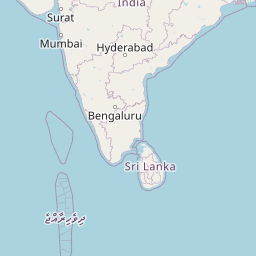


 54MDV
Maldives signal radar
Higher scores usually mean a more favorable research signal. Debt and tax are normalized so stronger scores are better for capital-preservation research.
Quick facts
Compare Maldives with


Why the Maldives presents a sharply divided scorecard
The Maldives combines an Investor Score of 54 with unusually wide differences between its components. The tax score is 79, the inflation score is 86 and capital mobility scores 80, while banking reaches 61 and stocks and ETFs 58. Those readings sit against a debt score of 12 and sovereign-credit score of 15. The 2026 government-debt estimate is 117.004% of GDP, and the current account was -18.679% of GDP in 2024. With GDP per person at $14,614.72 in 2025 and internet use at 85.24% in 2024, the useful question is not whether one headline score settles the case, but whether a specific opportunity can withstand the financing and sovereign risks shown by the weaker components.
Debt and sovereign credit deserve the first diligence pass
The debt and credit evidence is the clearest caution in the Maldives profile. Government debt is estimated at 117.004% of GDP for 2026, while central-government debt is unavailable. Fitch rated the sovereign CC on 12 June 2025; Moody's rated it Caa2 with a Stable outlook on 11 September 2024. Governance is mixed rather than uniform: political stability scores 64.96 and rule of law 57.73, while control of corruption is 41.05 and government effectiveness 47.04, all from 2024 observations. These measures do not predict an investment outcome. They identify the items that should be checked against current offering documents, counterparties and legal terms before capital is committed.
Use the component scores to sequence market research
Begin with what the dataset can distinguish. The tax score of 79 and capital-mobility score of 80 justify checking the exact tax rules and transfer mechanics relevant to the investor, while the banking score of 61 calls for institution-level review rather than assumptions about account availability. The stocks and ETFs score is 58, but listed-company counts, market capitalisation relative to GDP and the broader market-depth score are unavailable. The currency score of 42 adds another reason to test settlement and currency exposure for the chosen instrument. Compare the resulting evidence with published peers such as Nepal, Pakistan, Turkey, Iraq and Bhutan, using the same component definitions rather than headline rank alone.
Data confidence for Maldives
Hide My Cash combines country-level research signals into a simple comparison view. Some indicators are unavailable for thinner markets; missing values stay visible rather than being invented.
FAQ
What is the Maldives Investor Score in the 2026 data?
The Maldives scores 54 and ranks 122nd among eligible countries. The overall score is publishable because 9 of 11 primary components are available, above the required minimum of 8.
Why is Maldives sovereign risk a central concern?
The debt score is 12 and the sovereign-credit score is 15. Government debt is estimated at 117.004% of GDP in 2026, while Fitch rated the sovereign CC in June 2025 and Moody's rated it Caa2 in September 2024.
Which Maldives indicators look stronger in this profile?
Inflation scores 86, capital mobility 80 and tax 79. Banking scores 61 and stocks and ETFs 58. These are comparative research signals, not guarantees about access, returns, tax treatment or suitability.
What Maldives investment data is still unavailable?
Crypto, crypto-tax, real-estate, property-price and market-depth scores are unavailable. The record also lacks account ownership, market capitalisation relative to GDP, listed-company counts and central-government debt.
Public data portals behind this profile
Open the observation year shown beside each metric, then verify the underlying series at its publisher. The snapshot uses these portals when the matching field is available; legal, tax, property and crypto rules may require additional country-specific sources named in the page.