

 A low-debt profile constrained by governance and incomplete market evidence
Investing in the Democratic Republic of the Congo in 2026
The Democratic Republic of the Congo has an Investor Score of 48 and an eligible rank of 136, based on 9 of 11 primary components. Its debt score of 100 is the strongest signal in the profile, while governance at 27 and sovereign credit at 35 call for careful verification. Crypto, property and market-depth evidence remains unavailable.
- Start by confirming the investable instrument and its legal ownership route. Then verify Congolese-franc conversion, transfer rules, custody, fees and tax treatment with current primary documents. Check issuer disclosures and the latest sovereign-rating notice before committing capital.
- This page uses the 2026 Hide My Cash country dataset. The overall score requires at least 8 of 11 primary components; unavailable indicators are never estimated.
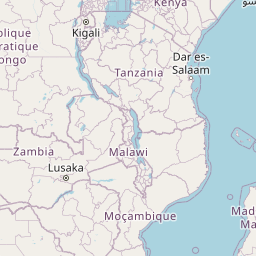

 48COD
Democratic Republic of the Congo signal radar
Higher scores usually mean a more favorable research signal. Debt and tax are normalized so stronger scores are better for capital-preservation research.
Quick facts
Compare Democratic Republic of the Congo with


Why the debt signal stands apart in DR Congo
The Democratic Republic of the Congo's clearest relative strength is its debt score of 100. The 2026 government-debt estimate is 7.34% of GDP, while the latest central-debt observation supplied here is 14.94% of GDP for 2022. The inflation score is also comparatively firm at 71, although the underlying 2026 inflation rate is an estimated 6.952%. These readings help explain why the country merits research despite an overall Investor Score of 48. They do not establish the availability, liquidity or suitability of any particular security, so the practical opportunity must be tested at instrument level.
Governance, credit and access require separate checks
The broad score masks material constraints. Governance scores 27, with 2024 component readings of 17.18 for control of corruption, 18.41 for government effectiveness and 34.60 for regulatory quality. The public sovereign rating in the dataset is S&P B- with a Stable outlook, dated 28 January 2022, and the sovereign-credit score is 35. Banking scores 44 and capital mobility 50; account ownership was 39.21% in 2024. These are screening signals, not proof that an investor can open an account, move funds or enforce a claim on acceptable terms.
Match the research path to the evidence actually available
Use the scorecard to order due diligence rather than to choose an asset. Debt at 100 and inflation at 71 justify checking current sovereign and fixed-income documentation first, while currency at 52 makes Congolese-franc settlement and conversion terms a separate workstream. The tax score is 54, but the available tax-revenue observation—10.66% of GDP in 2022—does not determine an investor's liability. A stocks and ETFs score of 0 must not be read as evidence about a specific security: listed-company and market-capitalization data are unavailable, as is the broader market-depth component.
Data confidence for Democratic Republic of the Congo
Hide My Cash combines country-level research signals into a simple comparison view. Some indicators are unavailable for thinner markets; missing values stay visible rather than being invented.
FAQ
What is the Democratic Republic of the Congo's Investor Score?
The 2026 Investor Score is 48, calculated with 9 of 11 primary components available. The country is tied at eligible rank 136; unavailable components are not treated as zero in that overall score.
Why is DR Congo's debt score so high?
The debt score is 100. The canonical record includes estimated 2026 government debt of 7.34% of GDP and a 2022 central-debt observation of 14.94% of GDP. The score is a screening measure, not a judgment on any bond.
What are the main measured risks for an investor in DR Congo?
Governance scores 27 and sovereign credit scores 35. Banking is 44 and capital mobility is 50. These measures make current checks on ownership, custody, currency conversion, transfers and enforcement especially important.
Does this profile cover Congolese property, crypto and stock-market access?
Not fully. Crypto, crypto tax, real estate, property prices and market depth are explicit research gaps. Market-capitalization and listed-company data are unavailable, so access, liquidity and local rules need separate primary-source research.
Public data portals behind this profile
Open the observation year shown beside each metric, then verify the underlying series at its publisher. The snapshot uses these portals when the matching field is available; legal, tax, property and crypto rules may require additional country-specific sources named in the page.